
Table of Contents
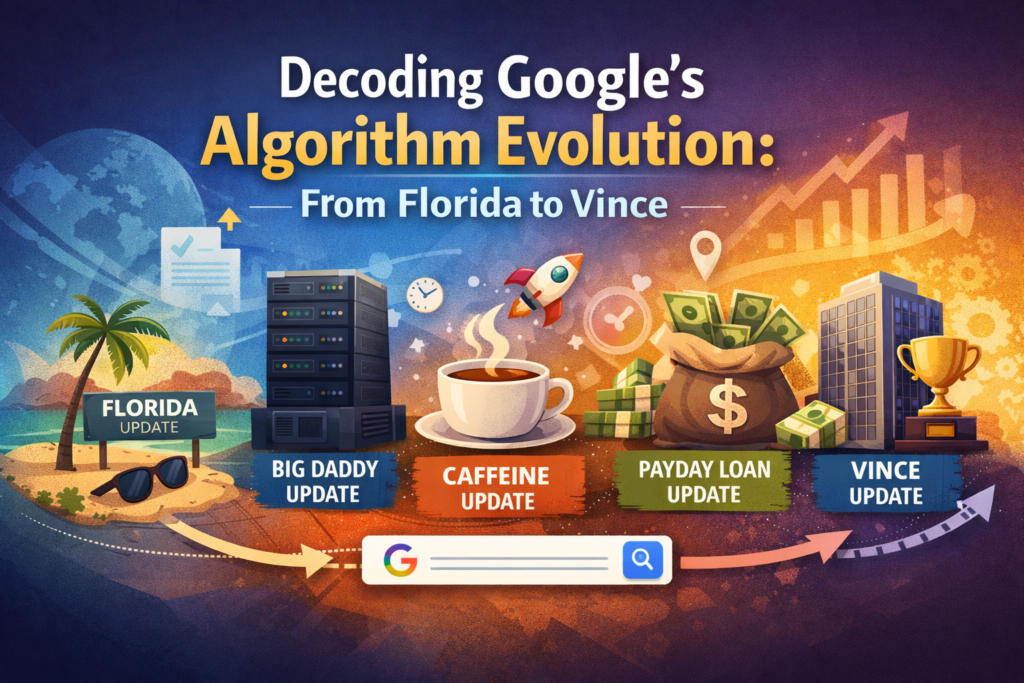
Florida Update – The Algorithm That Shook Early SEO
Big Daddy Update – Infrastructure That Changed Indexing
Caffeine Update – Speed, Freshness & Real-Time Results
Payday Loan Update – Fighting Spam in High-Competition Niches
Vince Update – Trust, Brand Authority & Big Names
1. Florida Update – The Algorithm That Shook Early SEO
The Google Florida Update (2003) was a turning point in SEO history. It targeted keyword stuffing, hidden text, and manipulative link strategies that dominated early search rankings. Businesses that relied on aggressive black-hat tactics saw massive ranking drops overnight.
For digital marketers today, the Florida update is a reminder that search engines reward relevance and authenticity over shortcuts. It pushed the industry toward ethical SEO practices, including high-quality content, natural keyword use, and meaningful backlinks.
As a digital marketing intern, understanding Florida means understanding the foundation of modern SEO—user-first content. Even in 2026, the core lesson remains the same: create value for the user, and rankings will follow.
2. Big Daddy Update – Infrastructure That Changed Indexing
The Big Daddy Update (2005–2006) wasn’t just another ranking tweak—it was a major infrastructure overhaul by Google. It improved how Google handled URL canonicalization, redirects, and duplicate content.
This update helped Google better identify which pages should rank and removed confusion caused by multiple versions of the same page. It also emphasized the importance of technical SEO, including clean site architecture, proper redirects, and canonical tags.
For marketers, Big Daddy showed that SEO is not just content—it’s also about how well your website communicates with search engines. Today’s technical SEO tools and site audits are rooted in the lessons from this update.
3. Caffeine Update – Speed, Freshness & Real-Time Results
The Caffeine Update (2010) revolutionized how Google indexed and delivered search results. Instead of updating the index in layers, Caffeine enabled continuous indexing, making search results faster and fresher.
This meant that new content—like blog posts, news articles, or trending topics—could rank within minutes. It marked the beginning of real-time SEO and content marketing as we know it today.
For digital marketers, Caffeine emphasized the importance of consistent content publishing, blogging, and staying updated with trends. Fresh content signals relevance, which helps boost visibility in competitive niches.
4. Payday Loan Update – Fighting Spam in High-Competition Niches
The Payday Loan Update (2013) targeted highly spammy industries such as payday loans, casinos, and pharmaceuticals. These niches often relied on low-quality backlinks and aggressive SEO tactics to rank.
Google introduced this update to clean up search results and ensure users received safe, trustworthy information. It significantly reduced spam and rewarded websites that followed ethical SEO practices.
For marketers, this update highlights the importance of E-E-A-T (Experience, Expertise, Authority, Trustworthiness). Especially in sensitive industries, trust signals, secure websites, and credible content are essential to rank.
5. Vince Update – Trust, Brand Authority & Big Names
The Vince Update (2009) shifted search rankings toward strong brands and authoritative domains. Well-known companies began ranking higher for competitive keywords, even if smaller websites had optimized content.
Google introduced Vince to improve trust and credibility in search results. Users were more likely to find reliable brands rather than unknown or spammy websites.
For digital marketers, Vince proves that branding and SEO go hand in hand. Building brand awareness, earning high-quality backlinks, and establishing online authority are key to long-term success.
Conclusion: What These Google Updates Mean for Modern Marketers
The evolution of algorithm updates from Florida to Vince shows one clear pattern—Google has consistently moved toward user-first, trustworthy, and high-quality search experiences. Each update, whether it targeted spam, improved indexing, or rewarded strong brands, reflects a bigger mission: delivering the most relevant and reliable information to users.
For digital marketers like you, these updates are more than just history—they are guidelines for future success. The key takeaways are simple but powerful:
Focus on quality content
Build genuine authority and brand trust
Maintain technical SEO health
Stay updated with algorithm changes
In today’s digital world, SEO is no longer about tricks—it’s about strategy, creativity, and value. By understanding these algorithm updates, you’re not just learning SEO—you’re learning how to build sustainable digital growth for brands.